
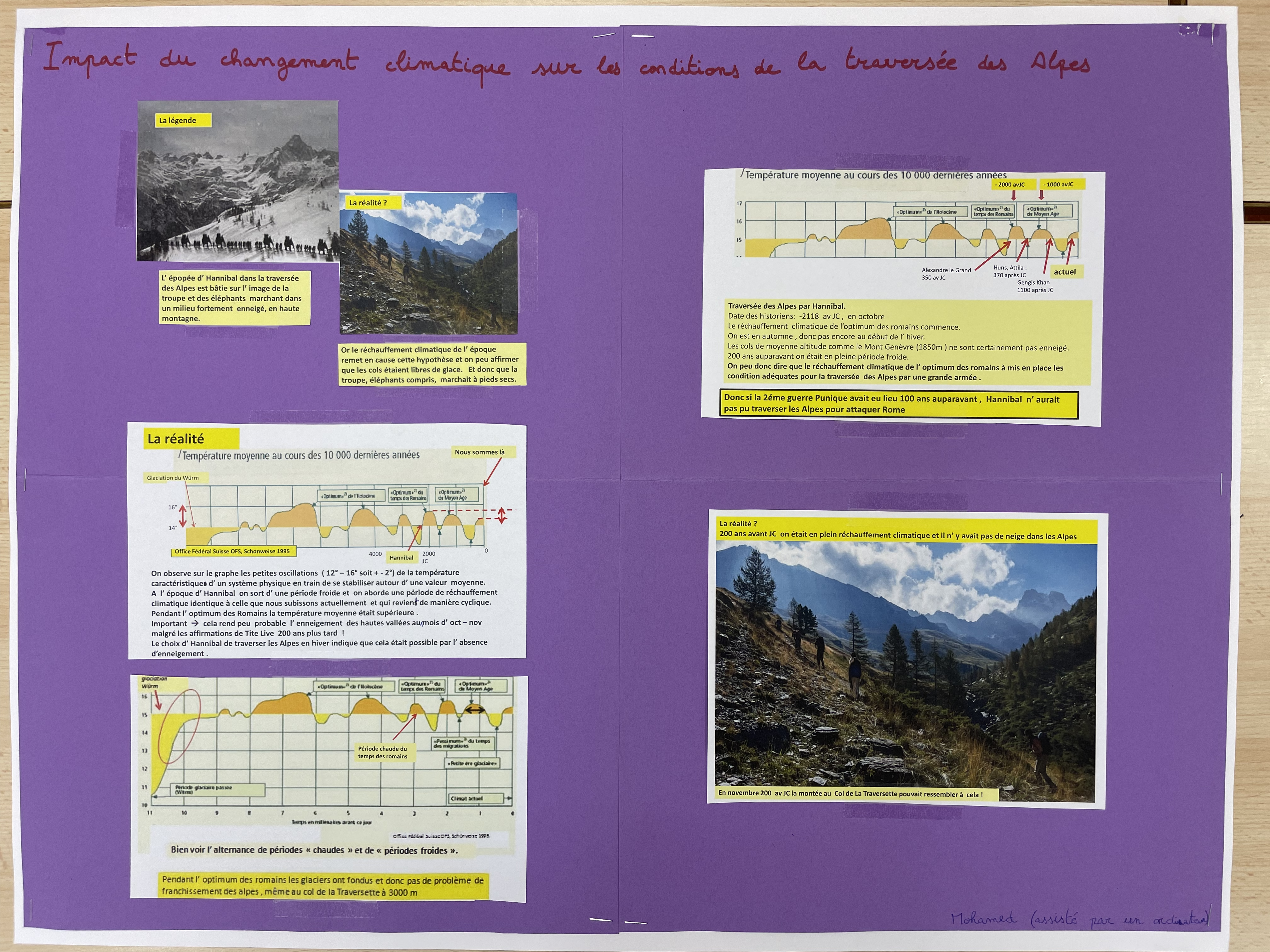
Impact of climate change on crossing conditions
Proyecto : From the alpine challenge comes the legend
The epic of Hannibal in the crossing of the Alps is built on the image of the troop and elephants walking in a heavily snowy environment, high mountain.
But the global warming of the time contradicts this hypothesis and we can affirm that the passes were free of ice. And so that the troop, elephants included, walked on dry feet.
© Copyright Eve Desmarais
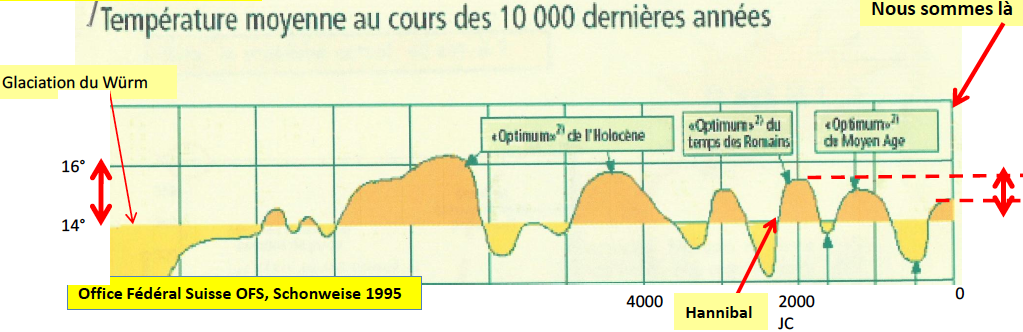
We observe on the graph the small oscillations (12° – 16° or + - 2°) of the temperature characteristics of a physical system stabilizing around an average value.
At the time of Hannibal we are coming out of a cold period and entering a period of warming climate identical to that which we are currently experiencing and which returns cyclically.
During the Roman optimum the average temperature was higher.
Important: this makes snow cover in the high valleys unlikely in the month of October and November despite the assertions of Livy 200 years later!
Hannibal's choice to cross the Alps in winter indicates that this was possible by the absence of snow cover.
Note: the mountain people of Chamonix still say today that in the Middle Ages (Optimum of Middle Ages), cows went on foot in Italy to Courmayeur via the Col du Géant at 3356 meters.
Observe on the graph that the Roman optimum is significantly warmer than currently.
© Copyright Eve Desmarais
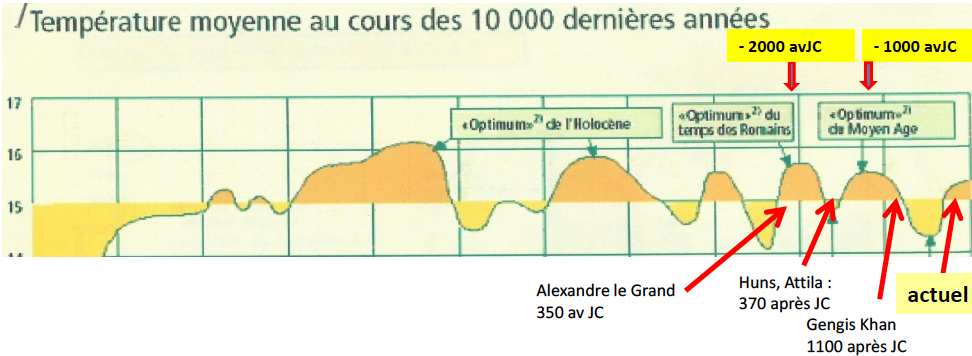
Crossing the Alps by Hannibal.
Date of historians: -2118 BC, in October, global warming of the Roman optimum begins. It's autumn, so not yet the start of winter.
Mid-altitude passes like Mont Genèvre (1850 m) are certainly not snow-covered.
200 years before, we were in the middle of a cold period.
We can therefore say that global warming of the Roman optimum has put in place the adequate conditions for the crossing of the Alps by a large army : so if the 2nd Punic War had taken place 100 years before, Hannibal would not have could not cross the Alps to attack Rome.
© Copyright Eve Desmarais